
See What Others See
Look, there’s what you see in yourself, who you want to be, who you think you are, and even what you believe your intentions are. And THEN, there’s how others see and experience you, and there is SO MUCH to learn from that perspective. In fact, some would say, this is foundational to innovation and creativity.
I love the words of civil rights activist, Marian Wright Edelman — “you cannot be what you cannot see.”
Your ability to close the gap between who you think you are and how others see you will determine the evolution of your leadership potential and change the game for YOU and everyone around you.

Curbing Ignorance By Embracing Yours: Cultivating enthusiasm to learn
Many seem quick to point their finger at others’ lack of knowledge. Yet, aren't we all ignorant to some extent? How can one obtain full knowledge or information on everything? Isn’t there always more to learn, well, about anything? Whether we are trying to gather all the facts, understand different perspectives, cultures, preferences, or make sense of science and data, at what point will we ever really know it all?Better yet, wouldn’t that be the point when learning stops?
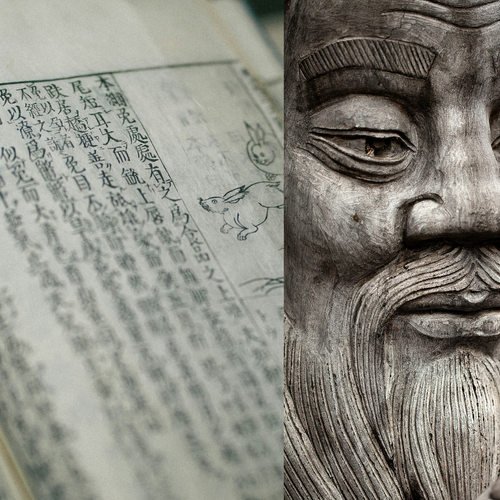
Celebrating Virtue In Perfomance: Revisiting “The Way” of ancient Chinese Philosophy
Performance, output, results—we learn these are the pathways to success at an early age. Of course, we cannot help but notice the praise we receive when we achieve, not to mention the attention we gain when we are “best” at something. Our culture is obsessed with outputs, so much so that we overlook how they are achieved.
The Essential Yet Often Overlooked Leadership Skill of Receiving: Lessons from the African philosophy of Ubuntu
My leader was setting the stage to prepare me for transcendence from “individual performance” to inviting “team contribution.” And let’s be honest; there’s more space for others to contribute when a leader is willing to turn the spotlight away from their own achievements and, instead, shine it for others to showcase their expertise, talents, intelligence, and accomplishments.
This is quite a mindset shift in many corporate environments with so much emphasis on “high performance.” As young professionals, heck, even kids, we are groomed to strive for our personal best. And yet, the focus on giving our best can often lead to a significant block in our leadership potential. Why? I think the answer can be found in a characteristic interwoven into the African philosophy of Ubuntu, known as: "Sahwira.”
In her book, The Awakened Woman, the inspiring Zimbabwean author and teacher Dr. Tererai Trent describes “Sahwira” as –
“Authentic in both receiving and giving. Give what is needed without being overbearing, and receive what you need without making it a duty to impress the giver” (Trent, 2017).

The Space Between Contraries: Lessons from Lao Tzu
Isn’t it funny how we resist life’s flow when things don’t go our way? A relationship ends, a job is lost, or an unexpected change takes place, and what do most of us do? We resist our circumstances, of course! Fighting, pushing, avoiding, and shrinking, we refuse to accept anything that doesn’t match our firm expectations. So filled to the brim with judgments and expectations, we cannot see the nearby gifts blossoming in circumstances resisted. As highlighted in the video “The Art of Effortless Living (Taoist Documentary)”—
“The unity we seek is already there, but it is only revealed when we trust the world. Changing the world in the hope of discovering unity is like a knife trying to cut itself” (Jason Gregory, 2019).
Oh, but trust is much easier said than done. Especially when we experience hardships that contradict anything we could have expected. Herein, though, lies an empty space of possibility – when what “we want” clashes with what “we get.”
Back to the great Master’s work, the “Tao Te Ching,” Lao Lzu reminds us – “Gravity is the root of lightness; stillness, the ruler of movement.” These profound words are worth a read a few times over.
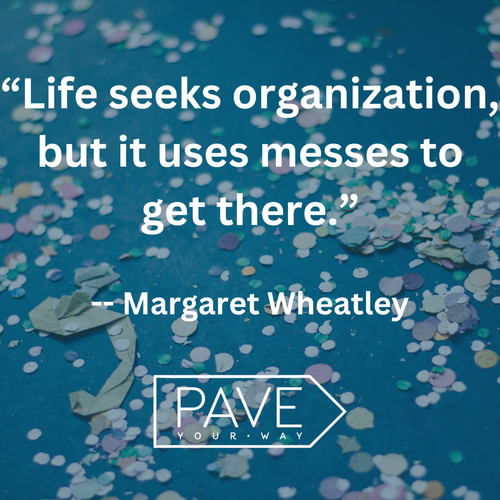
Bring On The Mess: Says nobody, ever — but perhaps we could ; )
So, accepting rather than resisting the normal human “messiness” we often face brings us one step closer to a phenomenon I like to refer to as “empowered powerlessness.” This is when we allow our old definitions and judgments of ourselves and the world around us to melt away, so we can create space to hear, see, and feel the infinite wisdom of the vast world around us. It is when we fully integrate the concept of “I do not know what I do not know” – and suddenly, wow, the world becomes a more interesting, magical place! I love how Wheatley reinforces this idea –
“The world becomes ever more fearsome as we realize the depths of our ignorance and confront our true powerlessness. Yet it is from this place, from an acknowledgment of our ignorance and lack of power, the call can go out for a new story” (Wheatley, 1998).

A Loaded List For A Happier, Healthier You in 2024
In the U.S., we spend nearly 20% of our Gross Domestic Product on healthcare. At the same time, our healthcare outcomes are worse than those of other developed countries. According to Integrative Health pioneer Andrew Weil, as of 2017, “the World Health Organization ranked the United States 37th in health outcomes” (Weil, 2017). Weil goes on to make a very interesting point –
“I would argue that we don’t have a healthcare system in America. We have a disease management system that’s functioning very imperfectly and getting worse by the day. The sad fact is that the diseases we are trying to manage are mostly diseases rooted in lifestyle choices. They have to do with how people are eating, their lack of physical activity, how they handle stress or don’t handle it. All these factors are really apart from looking at the physical body.”
In our Happiness Studies Master’s Program, we have learned about many different methodologies that support the principles of integrative medicine, which Dr. Weil sees as a solution to broaden our healthcare system and strengthen its outcomes. Before I give my thoughts on an integrative health system that could better serve individuals and society, let me briefly summarize the five basic principles of integrative healthcare identified by Dr. Weil himself: *
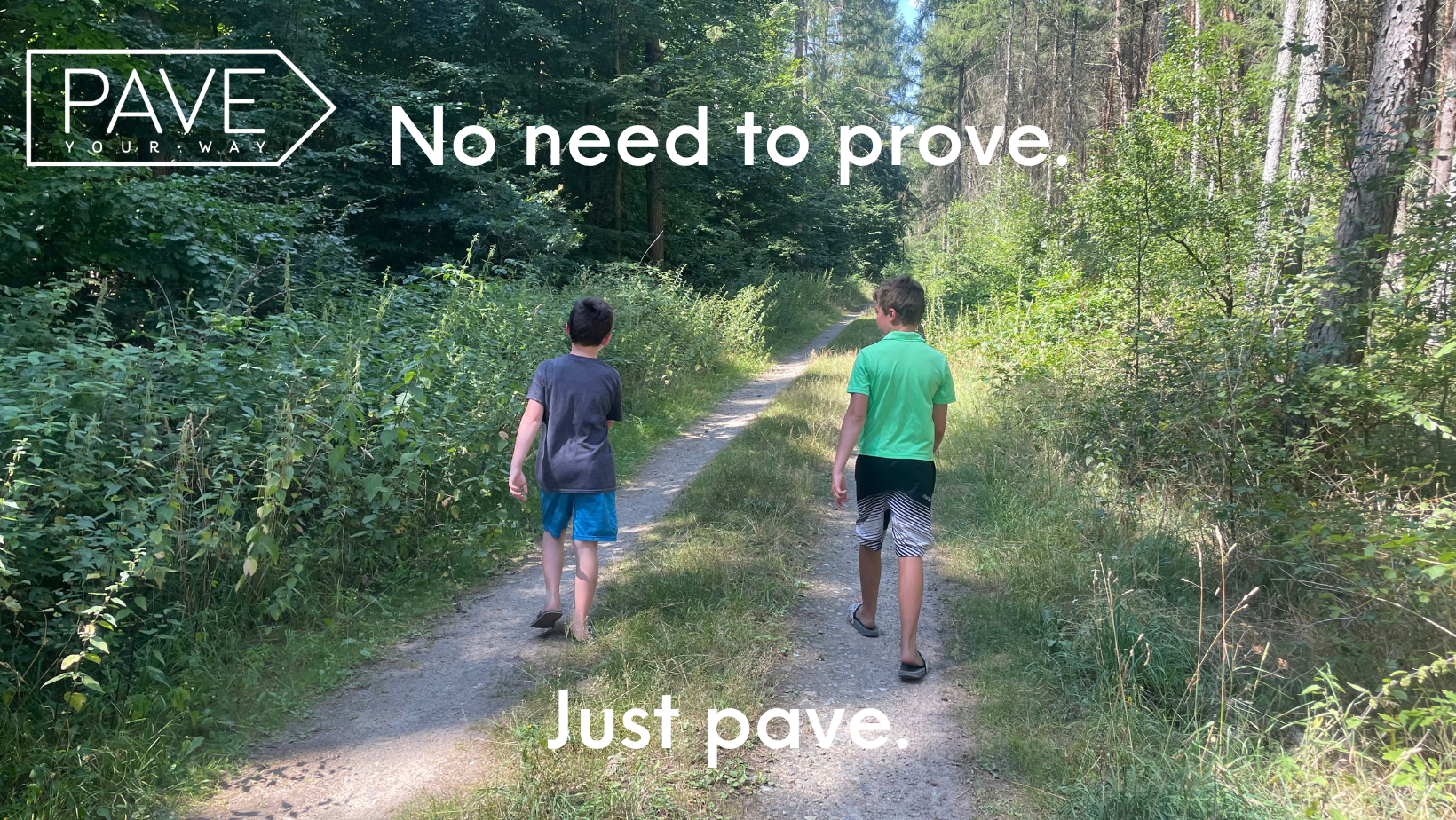
Paving vs. Proving
All too often, we get stuck on the idea that we need external proof to validate our own ideal image of ourselves and our lives, before we get started on something that’s important to us. In other words, if there are no external signals to prove that what we want is truly possible, we quickly turn a blind eye to our ideal images, and then block ourselves from growing into them.

6 Stepping Stones of Career and Life Transition
“What do I want to be when I grow up?”
Has this question come back to haunt you lately?
It sure haunted me about seven years ago, when I decided to pivot from my longtime career in marketing and advertising to becoming a dedicated mom, and founder of my own coaching practice.
If you’re like me, or most people who are contemplating a career or life transition, chances are you’ve given this question, and others like it, a bit of thought; but, you probably haven’t paused for long, because everything else in your world is commanding your attention – your work, your family, your friends, your school, your email accounts, the latest news headlines, social media posts… ALL OF THAT NOISE that surrounds all of us!
So, how do we typically manage all of this?

How I Jumped Off a Career Cliff & Found My Wings
A few years ago, I took a big leap. I felt like I was starting over – I was facing a vast unknown that could either succeed or completely fail. Since then, I’ve experienced quite the roller coaster ride. There have been some incredibly exciting highs and plenty of tiring lows.
Regardless of the ups or downs, I’ve continued to stick with a master plan, which is to consistently plug away at mastering my craft. And, you know what I’ve come to learn? The concept of trust isn’t just important when we take that initial leap of faith. That’s just the starting point.
Trust becomes even more important after the adrenaline, excitement, and hype of our first big decisions wear down. Trust is the only thing that keeps us connected with whatever is possible; especially, when we confront challenges, lulls or situations that just don’t quite pan out as we expected.
In a proverbial sense, trust creates a vast invisible web of opportunities. And, when we remember to honor it, we loosen our grip from what “has to” happen, and exchange it for possibilities that we could have never dreamed of on our own.
In the time it took me to jump off a giant career cliff and build a steady, successful coaching business, I’ve learned a thing or two. The overarching theme of it all boils down to giving the world some damn space to deliver what we want.
So, here’s where we can start:

Patience: The Underlying Key to Success
Are you impatient? Chances are, if you’ve got the slightest twitch of ambition, you are at least, just a little impatient. When we strive for success in any sort of endeavor, most of us wish our results would come sooner, rather than later. So, it seems like impatience is a perfectly normal, or perhaps even expected mode of operation. Right?
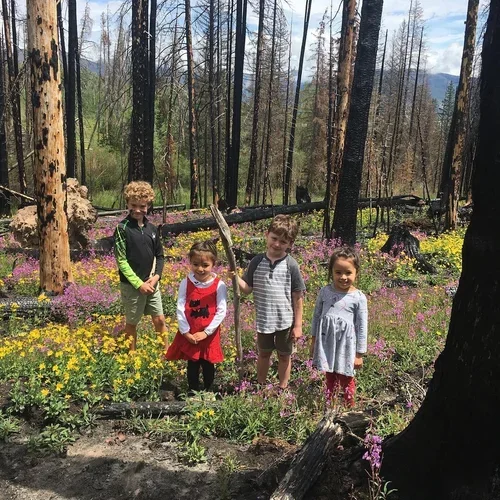
Regeneration in a Changing World: How the breakdown of old systems can lead to better lives.
A little over a year ago, I was hiking my favorite trail in the mountains with our two young boys and our great family friends in one of Colorado’s national forests – it had literally burned to the ground the year before. I remember how awe-struck I was by the burnt landscape’s polarizing beauty. The bright bold colors of scattered wildflowers burst like fireworks amidst their charcoal black surroundings. Even more stunning than the scenery itself was the site of our four small children, laughing and playing amidst the charred trees – the makeup of an inaccessible space, only one year prior.
As I snapped a photo, which is now the header image to this article, I couldn’t help but notice its poetic symbolism. The word “regeneration” instantly came to my mind, as I looked down to view the visual – “hmm” I thought, “isn’t this one of life’s simple truths?”

When You Appreciate The Good, The Good Appreciates:
I’ve noticed something really interesting over the last several months. It has to do with the energy, time and motivation I have for people who are appreciative. Now, while this may sound like an extremely obvious idea, which perhaps has taken me forty years too long to grasp, I’ve also noticed that many of us have a tendency to place far too much attention on people and activities that just don’t appreciate.
Note the duel meaning here; by appreciation, I’m talking about both an expression of recognition and gratitude, as well as an increase in value. As founder of the Happiness Studies Academy, former Harvard Professor in Positive Psychology and author of the book Happier, Tal Ben Shahar states, “when you appreciate the good, the good appreciates.”
So, what does it mean to “appreciate the good”? Is it as simple as passively taking note of the things that make us grateful, and perhaps even stating them out loud, and writing them down for ourselves? Or, could more be done in the form of appreciation? Is it possible that more of the finer things in life could appreciate, like love, deep friendships, rich conversation, success, wealth and overall life satisfaction, if we took more time to actively express our appreciation of others?

Know The Difference Between Busyness and Business
As I’ve wrestled my busiest self for all of these years, a few things have become abundantly clear. For starters, there’s a lot more to my “busyness” than all of the tasks, projects, accomplishments, social engagements, and activities I take on. Behind all of these things is actually a deep-rooted neediness to be recognized because of a much darker state of being – one that haunts me at my core.
For most of my life, I’ve stretched, flexed and adjusted my schedule to accommodate just about anything that seemed mildly “important,” just to numb-out a stinging voice underneath it all, which actually says, “I’m not very important.” And, what better way to discount this voice than to prove it wrong with everything I do?
As I’ve grown to own and understand this state affairs, I’ve also come to recognize a vast difference between my busyness, versus tending to important business. While the former keeps our need to feel important pacified with lots of distraction and noise, the latter is a disciplined choice to stay hyper-focused on what really matters. And, to know what’s really important, we have to get to know ourselves at a level far beyond what we do. As the late and great Wayne Dyer said, “I am a human being, not a human doing.”

There’s More to Life Than 'Being Visible': The liberating power of invisibility.
In today’s wired world, there is a lot of pressure, if not a blatant fixation on the concept of “being visible.” In fact, many of us may even question whether our experiences and opinions hold any value at all unless we are posting about them all over our social media platforms.
And, while it makes perfect sense that we’d want to share the greatest aspects of ourselves with the rest of the world, there’s also a great power in allowing ourselves to “be invisible” at times; yet, this concept seems severely underrated these days.
In a world where many business experts and leaders constantly tell us to, “go ahead, put yourself out there and be visible,” we may start to question if we are trying hard enough, or even at all, if we’re not courageously charging our social media accounts and posting our thoughts, photos and videos at all hours of the day.
And, while many of us have genuine desires to share our successes, celebrate our lives, and keep our friends, family, and colleagues in the loop, there is a yin to every yang. In other words, there can be too much of anything – and, yes, this even includes “visibility.”

7 Ways Being Your Own Mom Will Benefit You
In anticipation of Mother’s Day next month, I have a simple question.
What do you think would happen if we treated ourselves like our own moms treat us, or better yet, how might we treat ourselves differently, if it were more like how we treat own children?
If we did, I think we’d probably all live more joyful, stress-free and purposeful lives.
Think about it, the most nurturing mothers not only love and accept their children, no matter what, they also always see their children’s value.
I’ve often laughed at my own mom for openly pointing out my strengths and boasting about my successes, big or small. I’ve shrugged off her words with thoughts like, “of course you’d say that mom – that’s because I’m your daughter.”
But then I remember an important fact.
My mom has been with me from the beginning. Like it or not, she knows me better than most people – the good, the greatest, the bad and the ugly.
Yet, she chooses to always make room for the best version of myself. And, quite frankly, if we could all do the same for ourselves, I think we’d all experience much more inner peace.
So, what can we learn from our moms, and how can we model their behavior to benefit ourselves?

How To Make Effort Feel Effortless
An amazing thing happens when we notice that we are working hard, yet we still feel excited, motivated, and in a complete flow with our actions. In those moments, our biggest causes transcend our efforts and feel effortless. There’s a great saying, “If you want to be happy, put your effort into controlling the sail, not the wind.” In other words, when we channel our efforts toward the things that we can personally control — namely ourselves — then we flow with less resistance and a heck of a lot less conflict. This requires accepting whatever we are experiencing. So, how can we ride that wave of effortlessness more often?

7 Reasons To Stop Cursing Work: Lessons from Kahlil Gibran
Why is it that so many people in today’s world view hard work as the antitheses to success? In the eyes of many, it seems like unless you are off sailing the world, lying on a beach, playing tons of golf, and living a life of leisure, you might actually be failing. So, what’s the result of this type of thinking? And, better yet, how successful is it in, well, actually achieving success?
I often come across people on an ongoing quest to accumulate wealth, while limiting their involvement with actual work. Their ultimate goal is to live life to the fullest by avoiding too much responsibility that comes with the word. So, what happens next? Well, quite often, these same people end up calling a career and executive coach, like me, feeling “stuck.”

7 Energy Levels Influencing Money In Your Life
An amazing thing happens when we notice that we are working hard, yet we still feel excited, motivated, and in a complete flow with our actions. In those moments, our biggest causes transcend our efforts and feel effortless. There’s a great saying, “If you want to be happy, put your effort into controlling the sail, not the wind.” In other words, when we channel our efforts toward the things that we can personally control — namely ourselves — then we flow with less resistance and a heck of a lot less conflict. This requires accepting whatever we are experiencing. So, how can we ride that wave of effortlessness more often?
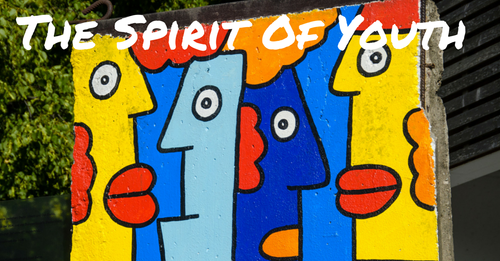
My Favorite Poem: Celebrating Poet Samuel Ullman
THE SPIRIT OF YOUTH
The poem’s words offer an ingenious key that unlocks life’s greatest secrets – ideas that are so basic and simple that it’s a wonder how we could ever stray far from them, or better yet, allow such thoughts of purity to escape our hearts like some sort of unsolved mystery.