Watch A Plant To Learn About Personal Transformation
What we can learn from Dr. Maria Montessori about healing and personal growth.
Written by Nina Cashman | September 16, 2026 for the PhD in Happiness Studies Program
“I think my never-to-be-forgotten impression was that experienced by one who has made a discovery.” — Dr. Maria Montessori (Larson, H., 2010)
From the corner of my eye, I could see the tiny, crisp leaves baking in the sun as I briskly walked past the fern my neighbor had gifted us eight months prior.
It sat on our back porch, exactly where I had placed it a few weeks earlier, hoping it might bounce back after its long winter stint in a shady corner of our home. It was dying. And like so many things we walk past without a second thought, I mechanically moved forward, arms full of groceries.
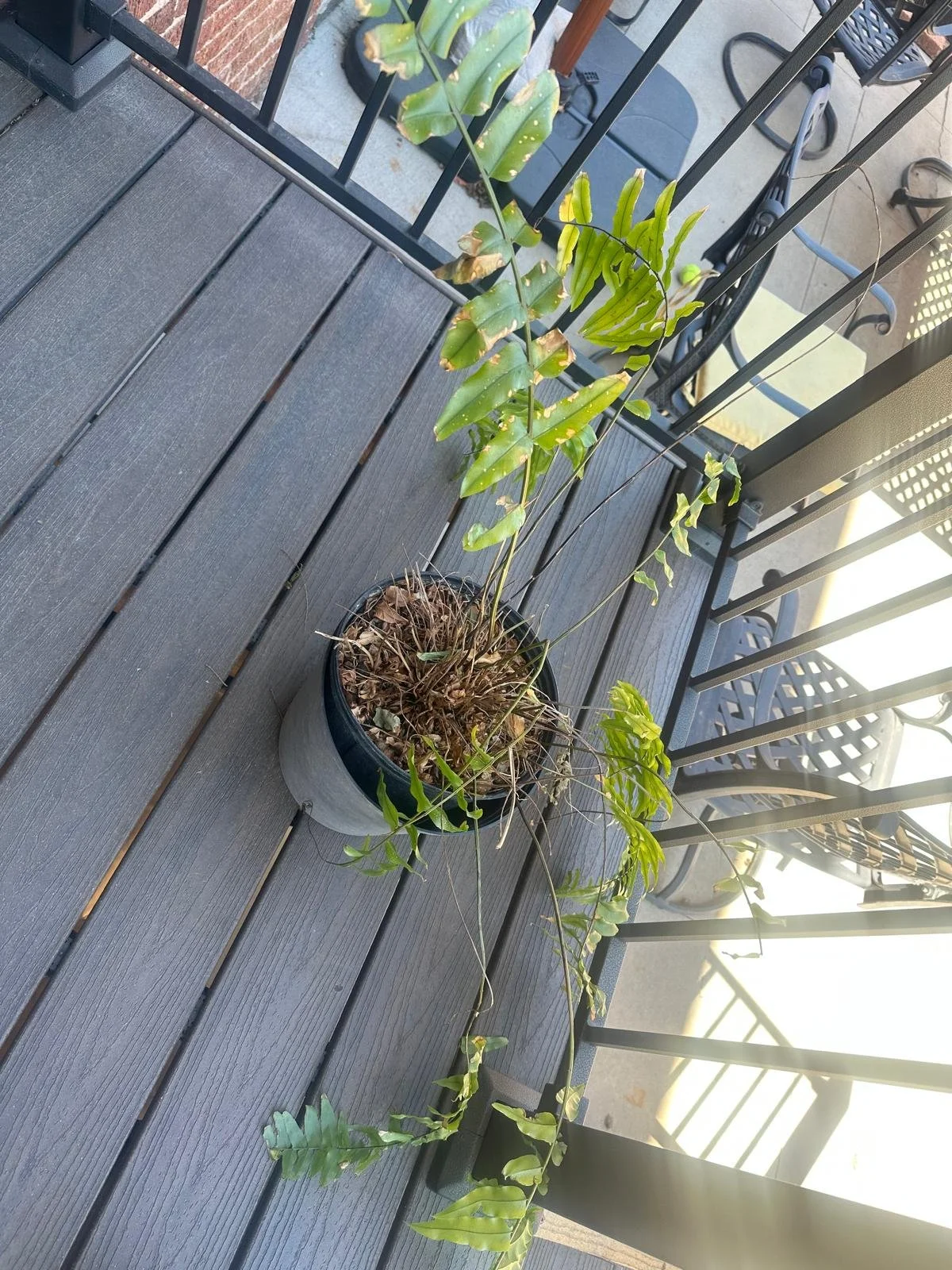
April of 2026: Slowly Dying
“What is up with that plant?” I thought as I made my way back to the porch. “It was full of life when our neighbor gave it to us, and it’s struggled all winter inside near our other plants that are thriving; now it doesn’t seem to like its sunnier spot on the porch, either.” So, I took what seemed like the next obvious step – looked up “care for ferns” on the internet, asked friends with a green thumb for a diagnosis, and I got some solid information. The consensus? Repot it. So, the next day I was off to the garden center.
Excited to solve the mystery of my plant’s sad circumstances and rejuvenate it back to health, as if it were a symbol of my own existence, I pulled the plant from its old abode. For the first time ever, I noticed the fern's roots had been drowning in water from a secondary pot I didn’t even realize was there. The poor thing had been suffering for months, and I had never stopped to really study it to learn why.
Ah, nature – the ULTIMATE teacher when we actually take the time to observe it!
In her book, The Montessori Method, the renowned child educator, Dr. Maria Montessori, describes the attributes of a great teacher –
“She must become a passive, much more than active, influence, and her passivity shall be composed of anxious scientific curiosity, and of absolute respect for the phenomenon which she wishes to observe. The teacher must understand and feel her position of observer; the activity must lie in the phenomenon” (Montessori, M., 2012).
In a world where answers are literally at our fingertips, it’s so easy for any of us to reach for answers in an endless pool of external information. We often spend a lot of time seeking knowledge without ever finding a solution, when the real answers lie in observation of what’s directly in front of us. As Montessori powerfully clarifies,
“Needless help is an actual hindrance to the development of natural forces” (Montessori, M., 2012).
The solution for my fern to thrive was much simpler than I thought – it didn’t require my fingertips to type a single inquiry into ChatGPT or seek answers from friends; it simply needed my fingers in its soil to observe the nature of its soaking circumstances.
Montessori reminds us,
“The life of the adult is practically an application of the senses to the gathering of sensations from the environment. A lack of preparation for this often results in inadequacy in practical life, in that lack of poise which causes so many individuals to waste their energies in purposeless effort” (Montessori, M., 2012).
Montessori’s approach to teaching children offers a way for us to learn as adults. For starters, many of us were not groomed to rely on our own observations and experiments to learn. Instead, we were taught to rely on experts and specialists to serve us with the “correct” information.
Speaking of experts, I find it ironic that Dr. Maria Montessori herself, a celebrated expert in human education, powerfully noted,
“He who is served is limited in his independence” (Montessori, M., 2012).
Since last spring, my amazing little fern has taught me so much, not only about what it needs to survive and thrive, but also about what I need to grow and evolve. As Jean-Jacques Rousseau writes in his book, Emile,
“We begin to learn when we begin to live” (Rousseau, J.J., 1911).
In the spirit of living and celebrating learning as a fundamental force in our human growth, I think it’s worth applying some of Montessori’s fundamentals in child education to our adult evolution. After all, as life calls us into greater responsibilities, with societal norms often “made up solely of renunciations and restraints” (Montessori, M. 20120), it’s easy to lose sight of our own power of discovery guided by that “inner force” which distinguishes us as individuals (Montessori, M., 2012).
To learn more about ourselves from the greatest teacher possible, the life forces of nature, I propose the simple idea of rescuing a plant and applying key components of the Montessori Method as this experiment unfolds.
Observe the plant and allow it to be a mirror of your life.
Get your hands dirty and study the plant – its root system, its environment, its placement. Is it getting too much sun when it needs shade, or vice versa? Is it getting too little or too much water? Does it need healthier soil, or a change of surroundings?
How does this plant mirror YOU? What about your past or root system is stunting your growth? How is your environment building you or stifling you? Are you giving or taking too much, receiving more than is healthy, or too little?
Allow yourself to be the child “initiated into observation of the phenomena of life” (Montessori, M., 2012).
Patiently give the plant the liberty to grow slowly.
What a great lesson nature reminds us of: transformation never happens overnight, and repair is gradual. Notice how your plant takes its time to recalibrate and blossom. In a world where we seek answers immediately, nature reminds us that wisdom and clarity often come with time, and yet we can still have faith that growth is underway.
Bringing the plant’s wisdom back to YOU, notice where you might be rushing to answers, and how you might afford yourself more space to allow things to unfold as they will.
Be the child “initiated into the virtue of patience and into confident expectation, which is a form of faith and of philosophy of life” (Montessori, M., 2012).
Watch the plant adapt to its new environment without any instructions.
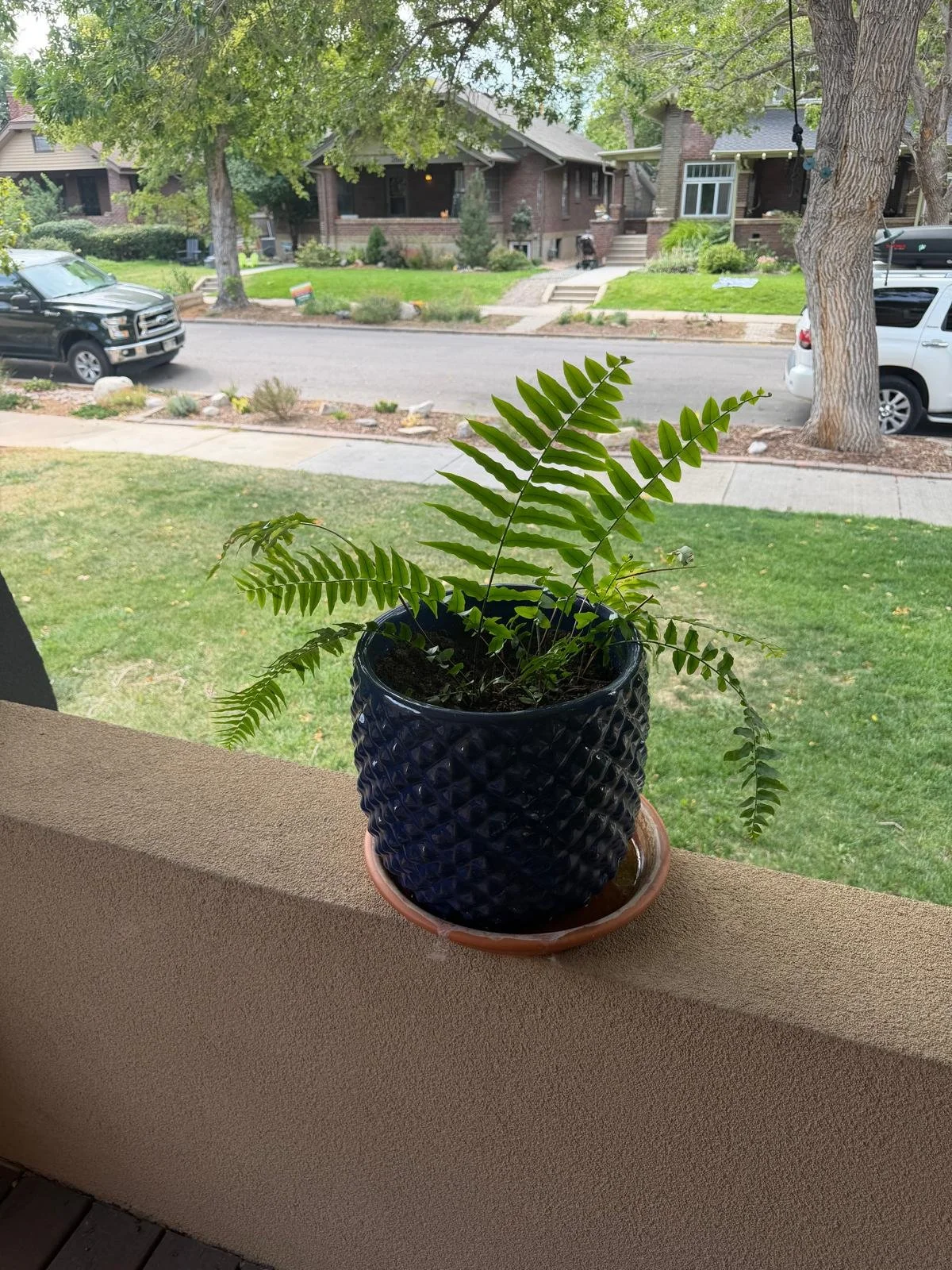
September of 2026: Slowly Thriving Again
Without any guide about “how to heal,” with the right soil, environment, nourishment, time, and space, the plant simply regenerates on its own. It knows exactly what to do, and before you know it, its once-withering leaves begin to sprout through the dark, damp soil again, blossoming into a thriving life-force. As Montessori reminded us,
“So nature, through the mechanism of experiment, gives us an infinite series of revelations, unfolding for us her secrets” (Montessori, M., 2012).
Once again, allowing the plant to inform YOU, what adjustments could you make to your day-to-day environment, routine, and daily interactions that could help you feel more mentally, emotionally, physically, spiritually, and relationally at ease, so you can allow for healthy personal and professional growth?
Be the child “inspired with a feeling for nature” and who “follows the natural way of development of the human race” (Montessori, M., 2012).
In the case of my own experiment to rescue a fern, I’ve found enormous satisfaction in watching nature slowly recalibrate from something nearing its end to a slow process of healthy renewal.
The lesson’s translation to the ebbs and flow of life has been simple, gradual, silent, and yet profound. Then again, nature, life’s greatest teacher, has a way of delivering truth without words. Montessori recounts the words of Dante’s advice to teachers:
“Let thy words be counted” – she elaborates, “The more carefully we cut away useless words, the more perfect will become the lesson” (Montessori, M., 2012).